
Mason, OH · Garage Door Service
Why Your Door Jumps the Track: A Mason-Specific Look
Mason's 1960s-70s housing stock and severe cold winters put real wear on track hardware. Here's what actually knocks a door off track here, and what to check first.
- Repairs & new doors
- Springs & openers
- Serving 5 nearby communities
How Local Conditions Play In
Most of the garages we get called to sit inside houses built between 1938 and 2004, with the median landing around 1972. That number matters more than people think. A lot of the track hardware in Mason garages is original to the house, which means it's been bolted to the same jamb studs for forty to fifty years. Steel track doesn't last forever just because nobody touches it. Over that many winters the brackets work loose a sixteenth of an inch at a time, the vertical section drifts out of plumb, and the door starts riding the edge of the roller channel instead of the center.
Across the 64 named areas that make up this part of the county, the building pattern repeats itself: 1960s and 70s construction with track mounted straight to framing, no shimming, no slip joints. That was standard practice then. It also means a door that's been quiet for decades can start walking off track with no single dramatic event behind it - just four or five decades of lumber shrinking and settling pulling the hardware a little further out of alignment each year.
The Seasonal Bit
Mason's winters fall in the severe end of the cold band, and that's not a label we picked, it's how the climate data for this area is classified. Severe cold does something specific to a garage door track: the metal contracts enough overnight that small gaps open at the track joints and splice plates. Moisture gets into those gaps, freezes, and by morning you've got a sliver of ice sitting exactly where a roller needs to pass.
A roller hitting ice doesn't derail cleanly - it usually jumps the flange, binds, and then the opener keeps pulling because it doesn't know the roller left the channel. That's the call we get most in January and February: a door that worked fine the night before and won't move an inch in the morning, or one that's lurched sideways a couple inches at the top panel. The track itself is rarely cracked. It's just been pulled a hair out of parallel by one more freeze-thaw cycle on top of forty years of them.
What Is Going On
When a door comes off track in a Mason garage, it's almost always one of two things layered on top of each other: aging hardware from the 1960s-70s building wave, or a winter freeze event working on track that was already a little loose. Rarely is it just one bent section from a car bumping it, though that happens too.
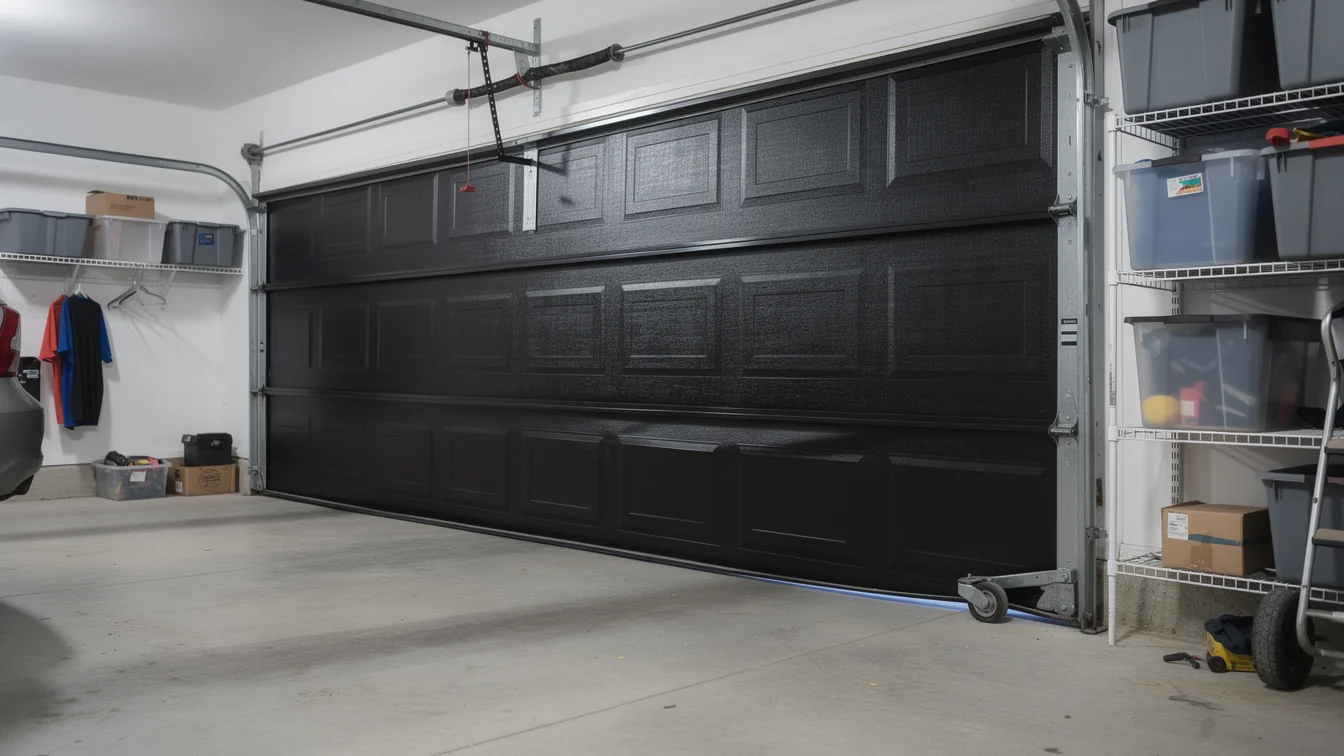
What we actually find on the ladder: bent horizontal track from decades of rollers riding slightly off-center, loose lag screws in framing that's shrunk since it was installed, and track sections whose factory splice has worked apart just enough to create a lip. Any one of those will let a roller walk sideways under the cold-weather conditions this area gets. None of them show up as a sudden event - they're the end of a slow drift, and the rollers.
One limitation worth saying plainly: if a track section is bent more than a few degrees out of true, we don't try to hammer it back straight. Track that's been forced back into shape fails again, usually at a worse time. Past a certain point it gets replaced, not straightened.
What to Check
Before you call anyone, a few things you can look at yourself. Stand at the side of the door and sight down the vertical track - if it's not running parallel to the door edge, that's your answer, and it's consistent with what we see in houses from this build era. Check the lag screws where the track meets the framing; on original 1960s-70s installs those often back out a turn or two over the years and that alone can let the track flex sideways under load.
In winter, look inside the track channel itself before you run the opener on a stuck door. If you see a glaze of ice at the bottom curve or the horizontal run, don't force it - forcing a frozen roller through ice is what bends track that was otherwise fine. Let it warm up or clear the ice by hand first.
If the door has jumped track and a panel is visibly out of its frame, stop using the opener. Running it further usually bends the track worse and can crack a panel. That's a call, not a DIY fix, regardless of what's causing it underneath.
Frequently asked questions
Is my door off track because the house is old, or because of the cold?
In Mason it's usually both. Houses from the 1960s-70s building wave have track hardware that's naturally loosened over the decades, and the severe cold here adds freeze-thaw movement at the joints. One sets up the problem, the other triggers it, often in the same winter.
Can I push a bent track back into place myself?
You can try, but we don't recommend it past a few degrees of bend. Track that's been forced straight tends to fail again under load, usually when you least want it to. Past a small amount of deviation, replacement holds up better than a field fix.
Why does this seem to happen more in January and February?
That's when the freeze-thaw cycle is hardest on the track joints. Ice forms in the channel overnight, a roller hits it in the morning, and a track that was already a little loose from age gets pushed the rest of the way out of alignment.
Related garage door services in Mason
More garage door guides
Book garage door service in Mason
Call now or request a quote - tell us what the door is doing and where you are.