
Mason, OH · Garage Door Service
When Fixing the Door Stops Making Sense
Mason homes mostly date to the 1960s-70s building boom, and the cold winters here wear out original hardware fast. Here's how to tell repair from replace.
- Repairs & new doors
- Springs & openers
- Serving 5 nearby communities
How Local Conditions Play In
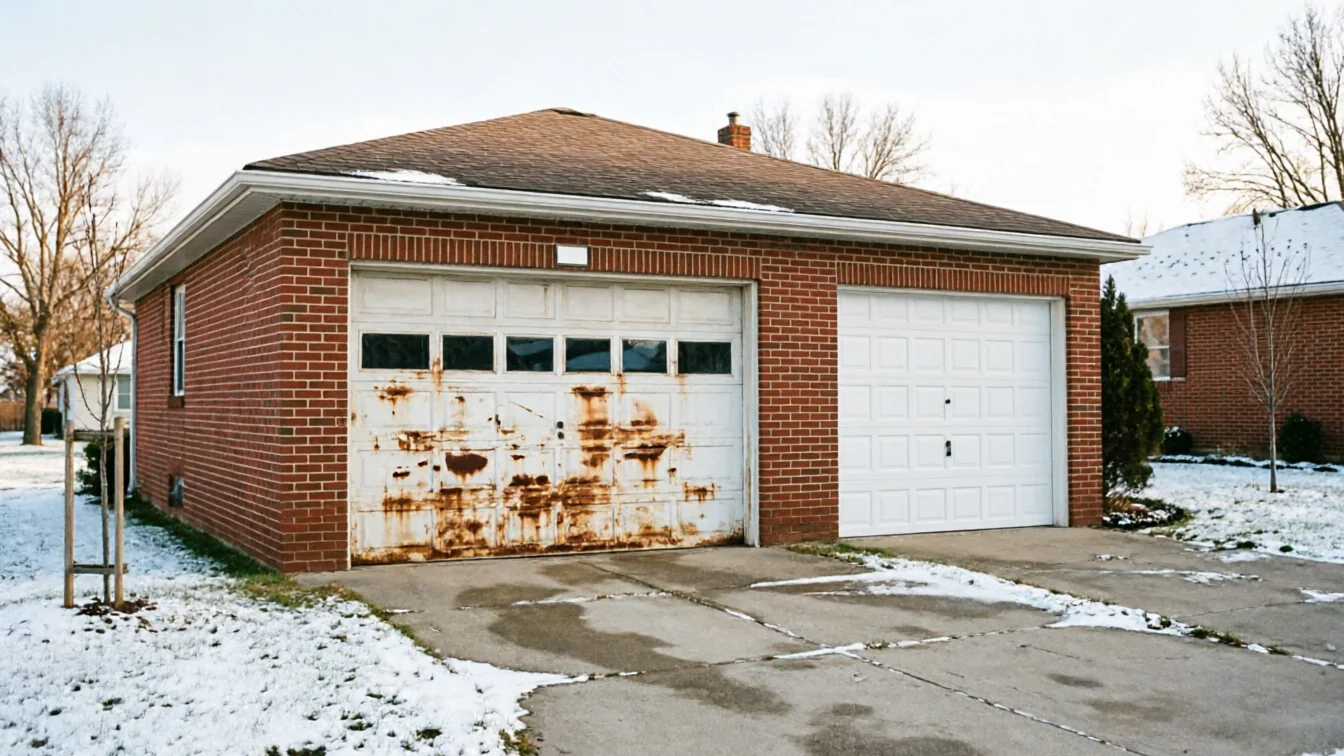
Most of the housing stock around Mason went up between 1938 and 2004, with the median build year sitting at 1972 and the bulk of it from the 1960s and '70s boom. That matters because doors and openers from that era were built to a different standard than what's sold today - thinner steel, single-layer panels, no insulation, and torsion springs sized for lighter loads than modern insulated doors carry. If your house falls in that main wave of construction, there's a real chance the door hardware is original or close to it, and original hardware from the 1960s-70s has had 50-plus years to fatigue. A spring that's lasted that long isn't a bargain anymore - it's a liability waiting on one more cold cycle. When a repair call turns up a door from that build window with a worn track and a mismatched opener bolted on later, that's usually the signal that you're patching something past its working life, not extending it.
The Seasonal Bit
This is a cold-climate area with severe winter conditions, and that changes how a garage door ages compared to a mild-climate house. Steel contracts in deep cold, torsion springs lose a little tension every freeze-thaw cycle, and nylon rollers that were fine in August can crack in January. Lubricant that's thick in warm weather can gum up stiff in winter, which is why a door that opened fine in October can suddenly bind in the cold snap. If your door is already showing age - slow to open, uneven on one side, noisy at the rollers - winter is when those small problems become a snapped cable or a seized opener motor. A repair that would have held for another year in a mild climate often doesn't get that extra year here. That's not a reason to replace every door before winter, but it is a reason to take a fall inspection seriously rather than waiting for a failure at 10 degrees with the car stuck inside.
What Is Going On
A lot of what we see is wear that lines up with the age of the house, not a one-off accident. In a service area with 98,697 owner-occupied houses and a median household income of $79,735, we're not dealing with a market full of brand-new builds or a market where nobody can afford to replace an aging door either - it's a mix of houses old enough that original equipment is wearing out and households that can weigh repair against replacement on the actual numbers instead of just patching because that's all they can do. The honest answer, most of the time, is that a single broken spring or a bent panel on a door that's otherwise sound is worth fixing. A door where the opener, springs, track, and panels are all original and all from that 1960s-70s stock is a different conversation - fixing one part just means the next part fails next winter.
What to Check
Before you call for a repair, look at a few things yourself. Check the build date of your house against that 1938-2004 range - if your door and opener look like they match the house's original age rather than a later renovation, that's worth mentioning on the call. Look at the springs: surface rust and visible gaps between coils mean they're near the end regardless of whether they've snapped yet. Check whether the door is insulated or a thin single-layer panel, since single-layer doors from the older end of that build range don't hold up as well against the cold swings this area gets. And be honest about the opener - if it's a chain-drive unit that sounds like a struggling motor every time it runs, that's often the first thing to go in winter, not the door itself. One thing we won't do is talk you into replacing a door that just needs a spring and a tune-up; that's a wasted call for both of us.
Frequently asked questions
Is it worth repairing an original garage door on an older Mason house?
If the house falls in the 1960s-70s stock that's common here and the door hardware is original, a single-part repair like a spring or cable is usually worth it once - but if several parts are failing together, replacement often costs less over time than a string of repair calls.
Why do garage doors fail more in winter here?
This area sits in a cold climate band with severe winters, and steel springs and rollers lose tension and flexibility in hard freezes. A door that was already worn tends to fail during a cold snap rather than in mild weather, so fall is the better time to catch problems.
How do I know if my door's hardware is original to the house?
If your house was built in the main 1960s-70s wave common across this area and nobody's mentioned replacing the opener or springs, there's a decent chance it's original. Surface rust on springs, a worn chain-drive opener, and a thin single-layer panel are common signs.
When does it make more sense to replace than repair?
When the spring, track, rollers, and opener are all original and all showing wear at the same time, fixing one piece usually just shifts the failure to the next part the following winter. A door with one isolated problem on otherwise sound hardware is a better repair candidate.
Related garage door services in Mason
More garage door guides
Book garage door service in Mason
Call now or request a quote - tell us what the door is doing and where you are.