
Mason, OH · Garage Door Service
When to Fix an Old Garage Door in Mason, and When to Replace It
Mason homes built between 1938 and 2004 mean a wide mix of garage door ages here. Here's how to tell if your door needs a repair or a full replacement.
- Repairs & new doors
- Springs & openers
- Serving 5 nearby communities
How Local Conditions Play In
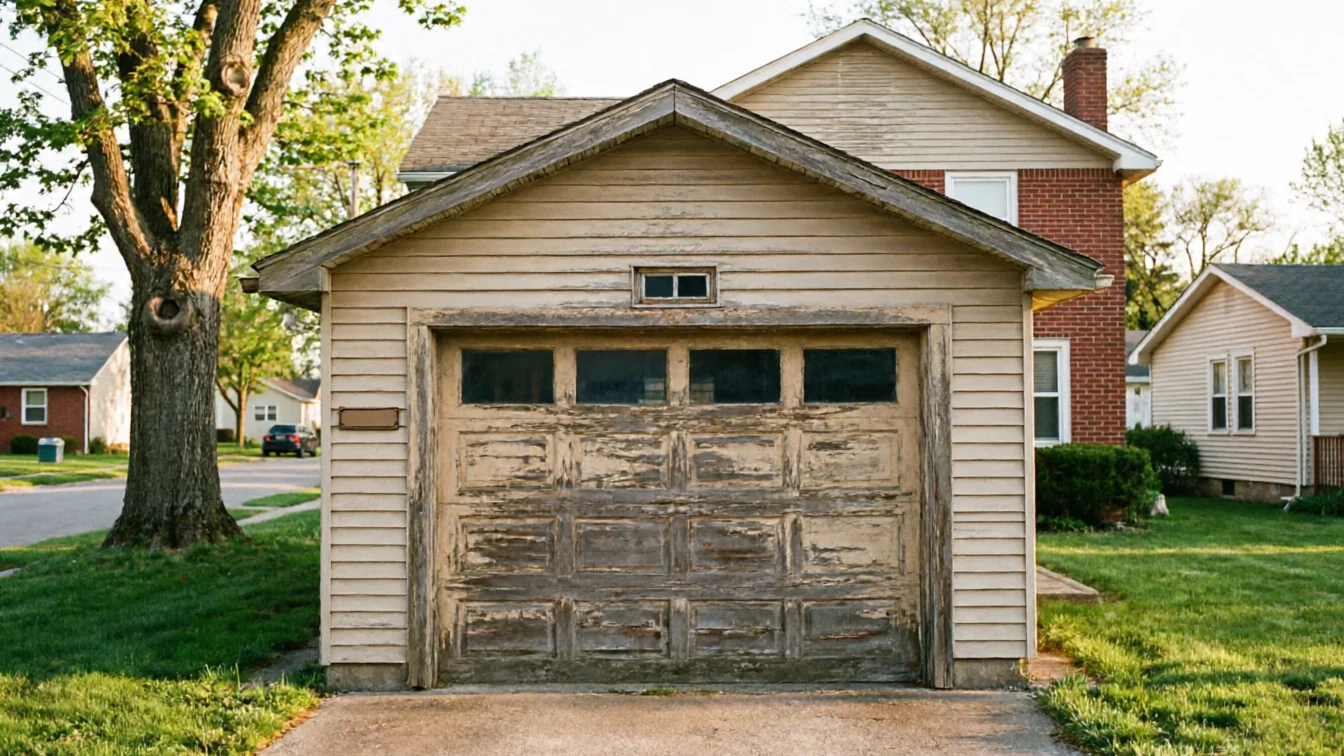
Mason's housing stock runs from 1938 up through 2004, with the median build year landing at 1972. That spread matters more than people think. A door installed when a house went up in the late 1930s or 40s is a different animal from one put in during the 1990s remodel boom - different gauge steel, different track hardware, different hinge spacing. Across the 64 named areas that make up this service area, from Landen and Kings Mills a few miles out to Lebanon, Monroe, and the Blue Ash and Kenwood side of things further off, most of what we see on calls traces back to that 1960s-70s building run. That means a lot of original one-piece or early sectional doors still hanging on torsion hardware that was never upgraded. The fix for a 1972 door isn't the fix for a 2001 door, and knowing which era you're dealing with before you call saves a wasted trip. We look at the track style, the spring mount, and the panel material first, because those three things tell us more about what's wrong than the symptom the owner called about.
The Seasonal Bit
This area sits in a climate band rated cold and severe, and that's not a label we picked - it's what the door hardware has to survive every winter. Steel contracts in the cold, grease stiffens, and a torsion spring that's been fine for years can suddenly bind or snap during the first hard freeze because the metal fatigue was already there and the cold just finished the job. Openers struggle too - a chain or belt drive that's slightly out of adjustment in October will bind harder once temperatures drop. We get more spring failures and opener strain calls in the coldest stretch of the year than any other time, and it's rarely a coincidence tied to one bad day. It's cumulative wear that the cold exposes. If your door has been making a new noise since the weather turned, don't wait for it to get worse - cold makes small problems bigger, fast, and it does it on its own schedule, not yours.
What Is Going On
Here's the honest version: a door that's original to a house built in the 1960s or 70s was built to a lower standard than anything made today, full stop. Thinner steel, no foam insulation core, hardware that was never rated for the spring cycle counts we expect now. That doesn't mean it's garbage - plenty of those doors are still structurally sound, especially if the house has newer tracks and rollers from a prior repair. What usually fails first is the spring, the cable, or the bottom panel where moisture and road salt do their work over decades. The door itself, the actual panel assembly, often outlasts the hardware around it two or three times over. So when a door from that era comes in for a service call, the question isn't age - it's condition. A straight, unwarped door with surface rust is worth fixing. A door that's racked, bowed, or has a bent track from years of being forced isn't, and no amount of spring replacement changes that math.
What to Check
Before you call anyone, walk out and look at three things. First, the panels - run your hand along the bottom section and check for rust-through, not just surface flaking; rust-through means the steel's structural integrity is gone, not just its paint. Second, the track - stand back and sight down it on both sides; if it bows outward where the door passes, that's wear from age and cycles, common on anything installed before the 1980s. Third, the spring itself - a torsion spring with visible gaps between the coils when the door is down is stretched past its working life, and in a cold-climate year that's a matter of when, not if, it goes. One thing we won't do is sell you a full replacement because a door is old. If the panels are sound and the track is straight, a spring and hardware job is the right call regardless of the install date. We do draw a line, though - once a panel has rusted through or a track is bent badly enough to need reshaping on site, repair stops making sense and we'll tell you that plainly.
Frequently asked questions
My garage door is from the 1970s - is it worth fixing or should I replace it?
Depends on the panel condition, not the age. A straight door with no rust-through from that era is usually fine to repair - spring, cable, and roller work extends it years further. If the steel has rusted through or the door is visibly warped, replacement is the better money. We check the panel first before we quote either way.
Why does my spring keep failing every winter?
This area sits in a cold-and-severe climate band, and metal fatigue that's already building in an older spring gets exposed hardest when temperatures drop. If it's failed more than once, the spring itself may be undersized for the door's cycle count rather than just unlucky timing.
Do you work on doors original to older Mason-area houses?
Yes, and we see plenty of them given the area's housing stock runs from the late 1930s up through the early 2000s, median around 1972. Original hardware on those doors often needs upgrading even when the door panel itself is still sound.
Related garage door services in Mason
More garage door guides
Book garage door service in Mason
Call now or request a quote - tell us what the door is doing and where you are.