
Mason, OH · Garage Door Service
What Wind Does to a Wide Garage Door in Mason
Mason homes built mostly in the 1960s-70s carry wide double doors that catch wind loads their original hardware wasn't sized for. Here's what to check before a gust finds the weak point.
- Repairs & new doors
- Springs & openers
- Serving 5 nearby communities
How Local Conditions Play In
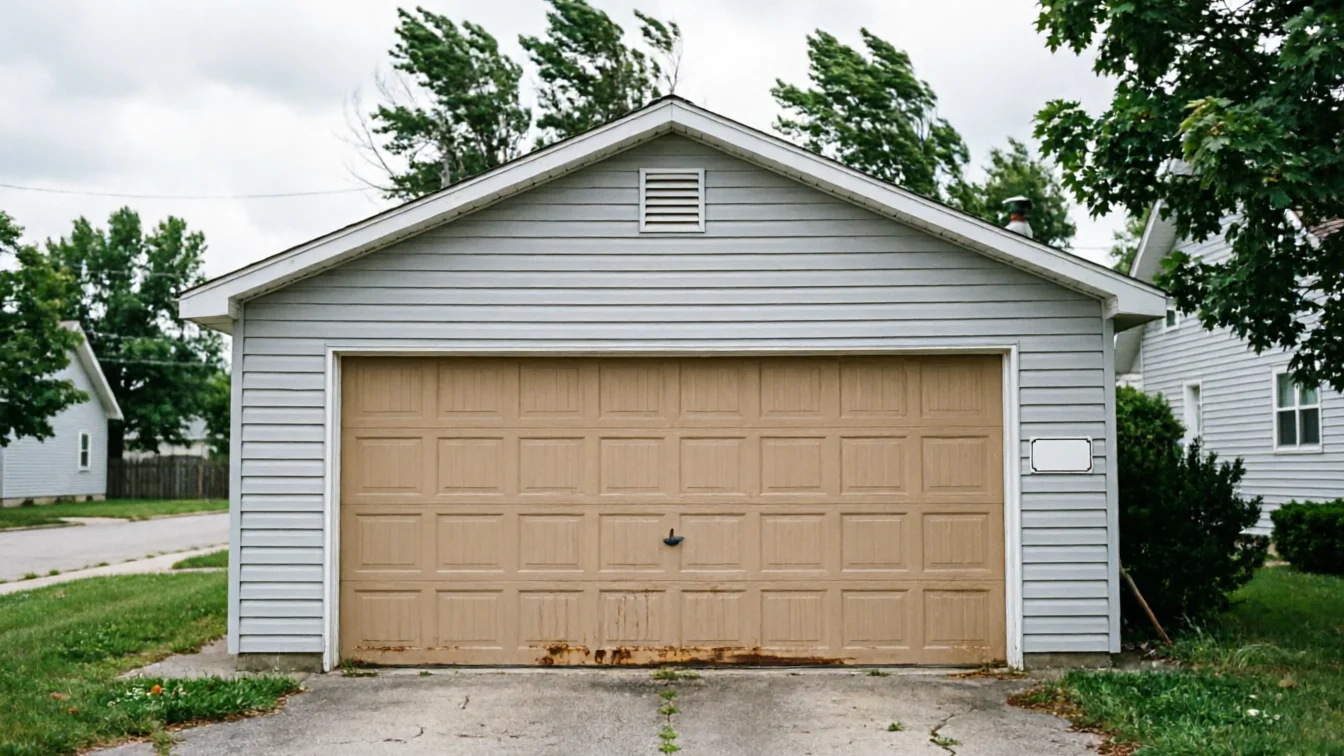
Mason's housing stock runs from 1938 up through 2004, but the median build year lands at 1972, and across the wider service area - the 64 named communities from Landen three miles off to Lebanon seven miles out - most of what's standing dates to the 1960s and 70s. That matters here because houses from that era were built with attached two-car garages and double-wide door openings as the default, not the exception. A 16-foot door has nearly twice the surface area of a single 8-foot door, and every square foot of that panel is a square foot wind can push on. The original torsion hardware sized for those openings in 1972 wasn't engineered against any wind-load standard - that kind of rating came later, and retrofitting it onto a door that age is not something you do with a tune-up. If your house falls in that build window, and most houses around here do, your door's width is working against it in a way a smaller single door never has to deal with.
The Seasonal Bit
This area sits in a severe-cold climate band, and that cuts two ways on a wide door. First, steel track and torsion springs contract in hard cold, which tightens tolerances right when a winter wind event is most likely to hit - the same week the metal is least forgiving. Second, the lift cables and hinges on an older 16-foot door were never slack-rated for the extra flex a wide panel shows under gusting pressure, and cold makes that steel brittle rather than springy. You get the worst combination on the same day: a stiff, unforgiving system on a door that's already wider than it should be for the loads it's seeing. This isn't a once-a-decade event either - severe-cold winters are the normal pattern here, not an outlier, so the stress repeats every year on the same hardware.
What Is Going On
A wide door without reinforcement flexes in the middle under wind pressure - you'll see it as a bow across the panel, most visible on the two center sections of a 16-footer. Every flex cycle works the same hinges and the same spot on the track, and on a door from the 1960s-70s building wave, those hinges and that track have usually had forty-plus years of normal wear before wind ever gets added to the load. The failure point is rarely the panel itself; it's the roller stem pulling out of a worn track channel, or a hinge screw that's been loosening in old wood framing for decades. None of this shows up as a sudden break most of the time - it shows up as a door that's gotten louder, or that catches slightly on one side, months before an actual failure. I'll say plainly: not every older double door needs reinforcement struts, and I won't sell you that if the door's still true and the track's still tight. But a lot of the stock around Mason is well past the point where that call goes the other way.
What to Check
Walk the door while it's down and look across the top two panels for any visible bow - do this on a windy day if you can, since a calm-day check won't show it. Check the roller stems where they meet the track for side-to-side play; more than a little slop there means the track's worn loose from decades of a wide door's extra leverage. Push on the center of the door by hand - a 1972-era double without horizontal struts will flex noticeably more than a modern braced door. Lastly, look at the hinge screws on the end panels; in older softwood jamb framing they tend to work loose first. None of this requires tools, and a homeowner can do the whole walk-around in five minutes before deciding whether a call is worth making.
Frequently asked questions
Is my garage door too old to reinforce against wind?
Not necessarily. A door from the 1960s-70s build era can often take horizontal struts added to the top panels without replacing the whole door. The exception is a panel that's already bowed or cracked - at that point reinforcing a weak panel just moves the failure point somewhere else, and replacement makes more sense.
Why does my double door flex more than my neighbor's single door?
Surface area. A 16-foot double panel catches close to double the wind load of an 8-foot single door, and houses built around here in the 1960s-70s wave used double-wide openings as the standard garage layout, so this is a common call in the area.
Does cold weather make wind damage worse?
Yes. This area sits in a severe-cold climate band, and cold steel is stiffer and more brittle than warm steel. A door that flexes fine in October can stress a worn hinge or track channel harder in January, when the same gust meets metal with less give in it.
Related garage door services in Mason
More garage door guides
Book garage door service in Mason
Call now or request a quote - tell us what the door is doing and where you are.